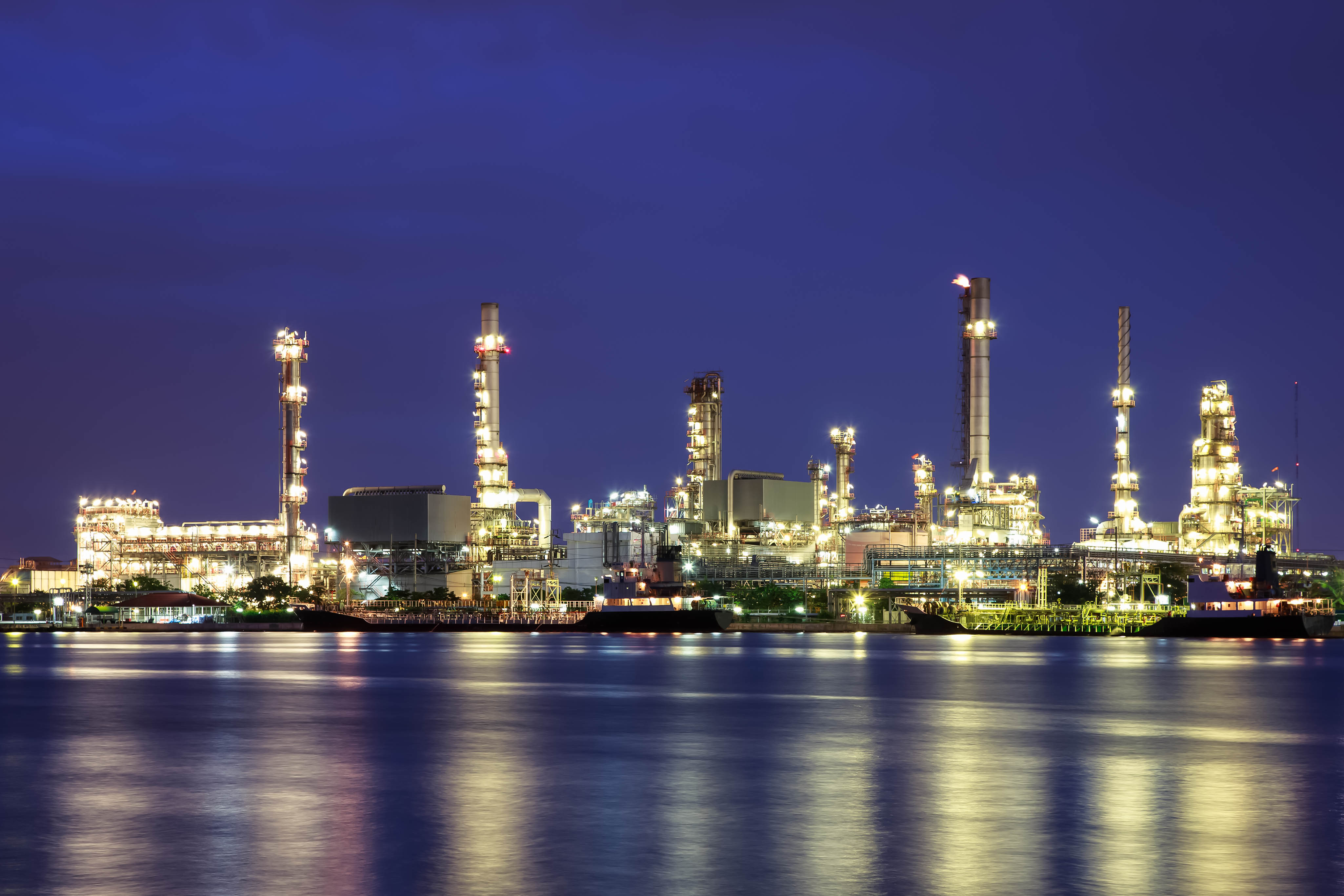
For decades, Nigeria has lived with an economic contradiction that few oil-producing nations would accept comfortably: despite being Africa’s largest crude oil producer, it has remained heavily dependent on imported refined petroleum products. That dependence has strained foreign exchange, exposed consumers to recurring shortages, and deepened public frustration over the country’s inability to convert natural resource wealth into domestic energy security. The arrival of the Dangote refinery has therefore been framed not simply as an industrial project, but as a national turning point.
The scale of that promise is hard to overstate. The Dangote refinery was designed to process 650,000 barrels of crude oil per day, making it the largest single-train refinery in the world and the biggest in Africa. In theory, that scale should be transformative. Nigeria’s domestic demand for petrol, diesel, and jet fuel has long been large enough to justify major local refining, yet the country’s state-owned refineries have performed far below expectation for years. The result has been a costly and unsustainable system in which Nigeria exports crude oil but imports the fuels its own economy depends on.
Dangote refinery directly challenges that model. If it operates near its intended capacity, it could sharply reduce Nigeria’s need to import gasoline and other refined products. It could also create room for exports to neighboring African markets, turning Nigeria from a fuel-importing state into a regional refining hub. That shift would have implications far beyond energy. Reduced fuel imports could ease pressure on the naira, lower shipping and logistics costs, improve supply reliability, and support broader industrial activity. In a country where fuel availability affects transport, food prices, electricity generation, and business confidence, the refinery carries enormous strategic weight.
Yet the central question is not whether Dangote can help. It clearly can. The real question is whether it can fully end Nigeria’s dependence on imported fuels. That answer is more complicated.
The first challenge is crude supply. A refinery can only deliver energy security if it has reliable access to feedstock. Nigeria produces crude, but production has been weakened by theft, pipeline vandalism, underinvestment, and financing arrangements that limit how much oil is readily available for domestic processing. This means a refinery built to reduce reliance on imported fuel can still be exposed to international market pressures if it must import crude to keep operating efficiently. In practical terms, that reduces the insulation Nigerians expect from a local refining giant. A domestic refinery without secure domestic crude supply does not completely solve the problem; it simply changes its form.
The second challenge is pricing. Many Nigerians assume local refining should automatically produce cheap fuel. That assumption is politically understandable, but economically incomplete. Dangote refinery is a private, commercially driven business. It buys inputs, manages debt, pays for logistics, and prices fuel in relation to international benchmarks. Even when the fuel is refined locally, the economics remain linked to global oil prices, freight conditions, exchange-rate pressures, and regional demand. This means Nigeria may still face high pump prices even if imports fall sharply. Local refining can improve supply security, but it does not guarantee cheap fuel in a liberalized market.
A third issue is infrastructure beyond the refinery gate. True fuel independence depends on storage, pipelines, marine terminals, trucking networks, and efficient domestic distribution. Refining capacity alone is not enough if products cannot move smoothly to consumers across the country. Nigeria’s long-standing downstream inefficiencies mean that the benefits of domestic refining will depend partly on how well the surrounding supply chain is modernized. Without these supporting systems, a world-class refinery may still struggle to deliver nationwide stability.
Even so, it would be a mistake to judge Dangote refinery too narrowly. Its significance is not limited to whether it eliminates every litre of imported fuel immediately. Its deeper value lies in changing Nigeria’s structural position in the energy economy. For years, the country has absorbed the costs of exporting raw crude and buying back value-added products. Dangote refinery offers a path toward reversing that pattern. It strengthens domestic industrial capacity, builds technical capability, and gives policymakers more room to rethink energy strategy around local value creation rather than import dependence.
In that sense, the refinery is best seen not as a silver bullet, but as the foundation of a new possibility. It can dramatically reduce Nigeria’s dependence on imported fuels, but ending that dependence altogether will require more than one flagship asset. Nigeria must also secure crude supply for domestic refiners, improve transport and storage infrastructure, maintain transparent market rules, and align energy policy with long-term industrial goals.
Dangote refinery may not solve every problem in Nigeria’s downstream sector overnight. But it has already changed the terms of the conversation. For the first time in years, Nigeria can realistically imagine a future in which imported fuel is no longer a permanent national vulnerability. Whether that future becomes reality will depend not only on the refinery itself, but on the discipline, policy coherence, and political will that follow it.
Apply for a Programme
Ready to deepen your energy expertise? Applications are open for the next cohort.
Apply Now