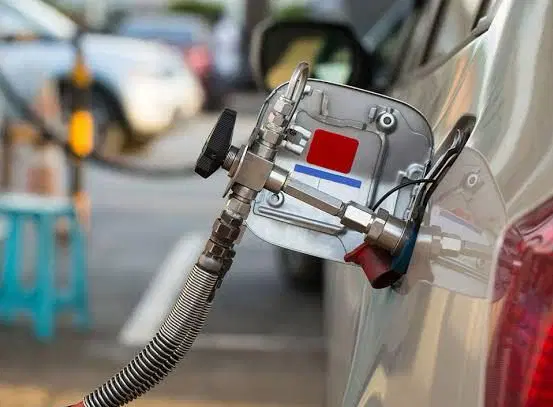
The numbers are hard to ignore. CNG currently costs roughly NGN 200 to 250 per liter equivalent: less than half the price of petrol. For commercial drivers who spend thousands of naira daily on fuel, this difference is transformative. A Lagos bus driver running on petrol might spend NGN15,000 daily on fuel; switching to CNG could cut that to NGN 6,000 or less. Over a year, that's savings that can rebuild an engine, pay school fees, or expand a fleet.
The federal government recognizes this potential. Under the Presidential Compressed Natural Gas Initiative (PCNGI), launched in 2023, Nigeria aims to deploy over 11,500 CNG powered vehicles and establish conversion centers across the country. The goal is ambitious but necessary: reduce the nation's dependence on expensive petrol imports and redirect capital toward domestic natural gas utilization.
Nigeria's Natural Gas Advantage makes CNG particularly viable for Nigeria: abundance. The country holds Africa's largest proven natural gas reserves: over 200 trillion cubic feet. Yet for decades, this resource was flared, wasted, or underutilized while the nation imported refined petroleum. CNG offers a way to monetize this domestic asset directly.
Unlike electric vehicles, which require massive charging infrastructure and reliable electricity (a persistent challenge in Nigeria), CNG leverages existing gas pipeline networks and can be distributed through localized compression stations. The technology is proven globally: Pakistan, Iran, and Argentina have operated millions of CNG vehicles for years.
The Conversion Cost remains the primary barrier. Converting a petrol engine to CNG runs between NGN 400,000 and NGN 1.2 million depending on vehicle type. For many drivers, that's a significant upfront investment. However, with conversion costs typically recovered within 6 to 12 months through fuel savings, the math works: if financing is available.
The PCNGI is addressing this through partnerships with banks and asset financiers to provide low interest conversion loans. Additionally, the government has waived import duties on CNG conversion kits and equipment, lowering costs further. Several states, including Lagos and Kaduna, are establishing conversion centers to make the process more accessible.
Skepticism around CNG often centers on safety. High pressure gas tanks conjure images of explosions. Yet CNG is actually safer than petrol in many respects: it dissipates into the air rather than pooling on the ground, and its ignition temperature is higher. With proper installation and maintenance, CNG vehicles meet stringent international safety standards.
Infrastructure, however, remains the Achilles heel. Nigeria currently has fewer than 100 CNG refueling stations: nowhere near enough for mass adoption. The government plans to roll out thousands more, but execution speed will determine whether momentum builds or stalls. Without convenient refueling, even the most enthusiastic drivers will hesitate.
Beyond economics, CNG burns cleaner than petrol, producing up to 30% less carbon dioxide and significantly lower levels of harmful pollutants like sulfur oxides and particulate matter. In Lagos, where traffic congestion turns city air into a health hazard, widespread CNG adoption could reduce respiratory illnesses and premature deaths linked to vehicle emissions.
This environmental angle also positions Nigeria favorably for international climate financing and green investment: capital that could further subsidize the transition.
CNG is not a magic bullet. It won't solve Nigeria's transportation challenges overnight, nor does it eliminate the need for long term investment in public transit, rail, and eventually electric mobility. But as a transitional fuel: available now, affordable now, and producible domestically: it offers perhaps the most realistic path to immediate relief for Nigerian commuters and transporters.
The success of CNG in Nigeria will depend on three factors: sustained government commitment beyond political cycles, rapid infrastructure deployment, and creative financing that puts conversion within reach of everyday drivers. If these pieces align, CNG won't just be an alternative: it will be the standard.
For a nation tired of fuel price shocks and import dependence, that future cannot come soon enough.
Apply for a Programme
Ready to deepen your energy expertise? Applications are open for the next cohort.
Apply Now